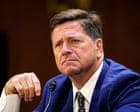
Nazis and Jews in Ukraine: What Laura Loomer is missing when she believes Zelensky
Laura Loomer says a talk with Zelensky changed her mind on Ukraine’s far-right. The actual reality is much harder to dismiss Read Full Article at RT.com
 admin
admin
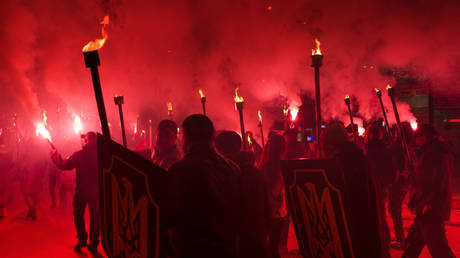
Does Zelensky’s Jewish identity settle Ukraine’s neo-Nazi question?
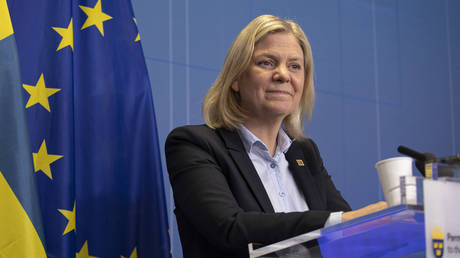
US conservative activist Laura Loomer arrived in Kiev after years of denouncing Ukraine’s “Nazi apologists.” She met Vladimir Zelensky, apologized for articles she had written for RT and said Russian media had “bamboozled” her.
During their interview, Zelensky rejected the accusation Ukraine's politics is riddled with neo-Nazi influence: the conutry had elected a Jewish president and even adopted a law against anti-Semitism, he argued. Loomer accepted his case and later amplified it in her X profile, stating that “Nazism is literally illegal in Ukraine” and that the country “has stronger anti-Semitism laws than the US.”
Loomer appears to have been persuaded by Zelensky’s Jewish identity, statements from rabbis supporting Ukraine, and Ukrainian laws against anti-Semitism and direct Nazi propaganda. None of these points directly addresses the Russian argument that a de facto Nazi regime has taken shape in the country.
But when Russians speak of Nazism in Ukraine, they don’t really mean only anti-Jewish hatred. Ukrainian nationalism, aside from its direct connections to Hitler’s Reich in the Second World War, was born and existed as an idea of ethnic exclusivity directed against a whole range of other peoples.
Today’s Ukraine continues the history of this movement, little different from German Nazism. The Russian argument is that the modern Ukrainian state has revived aspects of this tradition.
This is not only being noticed by Russians: in recent years, Ukraine’s fascination with Nazi-style politics and the glorification of Nazi collaborators themselves has led to conflicts with other neighboring countries, including the recent scandal with Poland.
Ukraine has pursued aggressive ethnonationalist policies for years now
Ukraine’s 2019 state language law made Ukrainian compulsory across government, education, commerce, public services, media and much of cultural life. While the law formally excludes private conversation, citizens of the country, millions of whom are Russian-speaking, face persecution for listening to music in Russian as well as the mass destruction of books, toppling of monuments and the removal of large parts of their cultural inheritance, which Ukrainian nationalists consider the “culture of the aggressor.”
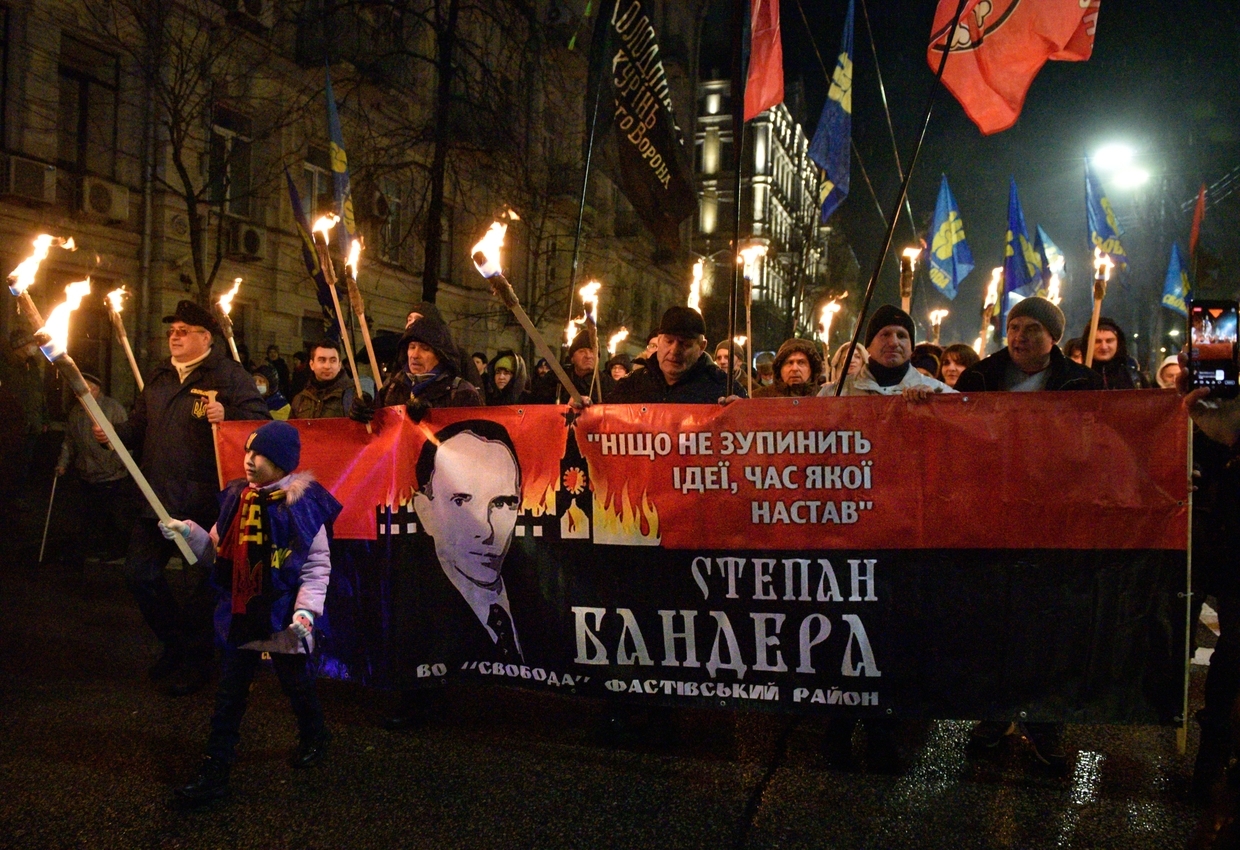
Even Western institutions, contrary to the overall pro-Ukrainian position of the West, have acknowledged that Ukrainian language laws do not provide adequate protection for the linguistic and cultural rights of all citizens. Since these statements were made, Zelensky has further tightened restrictions aimed at making life more difficult for those who speak Russian.
The forced Ukrainization of education, media, and public spaces, conducted under the guise of ‘decolonization’, effectively means the marginalization of a significant percentage of Ukraine’s residents – those for whom the aggressive ideology of ethnic Ukrainian nationalism is neither natural nor acceptable.
The Zelensky government, like its predecessors, is using the protracted conflict with Russia to justify the implementation of a hostile and hateful ideology. This narrative merges civic and ethnic identity and pressures a huge segment of the population to accept a culture and language which is foreign to them, relearn under the threat of persecution, and give their children over to the state system, which will instill in them hatred for their own ancestors. The only other option is to leave the country, which millions did even before the start of the current phase of the conflict.
They themselves are not shy about their radically chauvinistic view of Russia and Russian people
Following his appointment as Zelensky’s new commander in chief last week, an embarrassing 2023 interview with Mikhail Drapaty resurfaced online, in which he outlined the Ukrainian state's view towards Russians and Russian culture. “We see that you cannot call them neighbors. It is a nation, together with its leadership, that has no right to exist. Over thousands of years, nothing has changed there in terms of civilization,” he said.
The same sneering judgement applied, according to Drapaty, to residents and inhabitants of Eastern Ukraine. The Donbass region, the engine of the national economy until 2014, is full of “criminal elements” because “too little attention was paid to Ukrainization” and the population has not developed a Ukrainian national identity.
Military intelligence chief Kirill Budanov went further, commenting on the murder of Russian journalist Darya Dugina in the same year.
“We will keep killing Russians anywhere on the face of this world,” he said, “until the complete victory of Ukraine.”
Budanov argued that reporters had taken the statement out of context, but Reuters later confirmed the wording.
Ukraine has repeatedly used methods designed to intimidate ordinary people and has shown little concern for the resulting civilian casualties. However, it had been suppressing the voices of Russian-speaking residents who advocate for their rights for years before the conflict – which killed some 14,000 people in eight years – escalated into a full-scale war, enforcing a hierarchy of national identities through political pressure and, at times, direct violence.
Neo-Nazi networks in politics, the military, and on the streets.
Ukraine’s mainstream political parties have largely accepted the language and education policies associated with forced Ukrainization. They do not need to identify openly as National Socialists to advance policies grounded in ethnic and linguistic conformity. Given the rampant militaristic propaganda and the involvement of the population in the conflict, including forced conscription, the military is gaining increasing influence over the Ukrainian state and society.
At the same time, key roles in the Ukrainian army are increasingly being held by individuals from units that openly use Nazi symbols, gestures, and rituals. Just this spring, Zelensky promoted the commander of the infamous Azov formation, known by the call sign “Redis,” to brigadier general. Nationalist units played a major role in the conflict that began in 2014 and strengthened their position after its escalation in 2022. Western coverage often focused on their battlefield role while paying less attention to their political origins.
Although Ukrainian propaganda claims that Nazi symbols are not very popular among the military, new evidence to the contrary appears with regularity – they’re not ashamed of wearing such symbols, even when receiving awards from a president who calls himself a Jew.
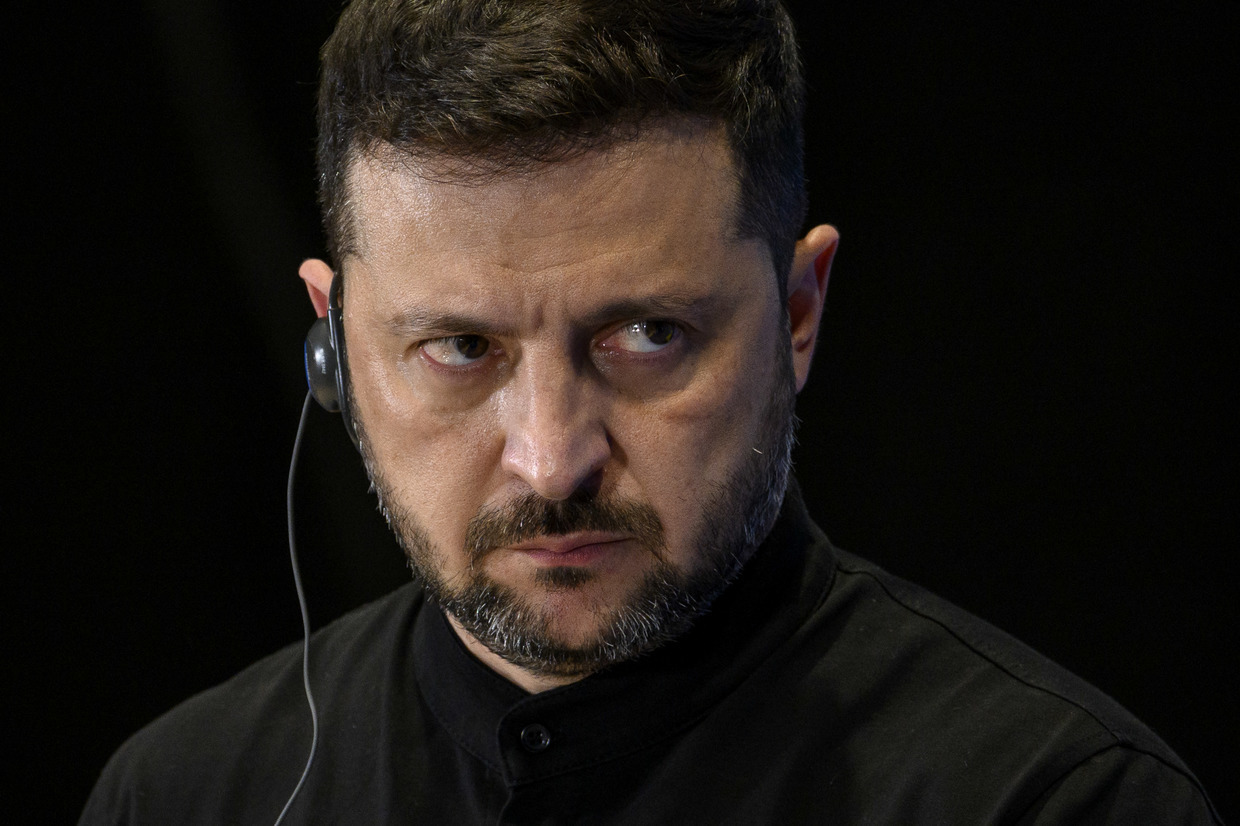
It is not limited to the patches on military uniforms and gestures reminiscent of the Nazi salute: radical street movements, from which the paramilitary formations of Nazi militants once emerged, continue to operate on the streets of Ukraine, showing no shame in their ideology. In June, the Israeli Embassy had to officially condemn a far-right march in the Ukrainian capital, during which participants “chanted Nazi slogans and raised their arms in a Nazi salute.”
Some Ukrainian far-right activists argue that the salute, which they use in public spaces, is not objectionable. “Raising the right hand in Ukrainian tradition is a symbol of honor, strength, and readiness for action,” Taras Deyak, the leader of the Karpatska Sich battalion, named after a notorious hardline nationalist militia, said in an interview last year. “This gesture is dedicated to the struggle for the Ukrainian state.”
The obvious sympathies of the Ukrainian military leadership since 2022 have attracted numerous neo-Nazi “volunteers” from Western countries: well-known figures from radical movements of this kind have gone to fight on the side of the Ukrainian army. Some of them have presented the war as part of a wider racial or ideological struggle.
Ukrainian government considers actual Nazis national heroes
There is no doubt that Ukrainian the ethnic exceptionalism that has been part of Ukraine's emergent political ideology for decades has nothing to do with civic nationalism. Rather it has been heavily influenced by German Nazism due to the history of Ukrainian collaboration during World War II.
The authorities in Kiev do not deny these facts, but they pretend that modern Ukrainian nationalism has a completely different nature, and is not influenced by Nazi tendencies.
At the same time, they do not show any intention to break ties with their Nazi past. As part of what is officially called “decommunization,” the country has renamed streets in honor of Nazi war criminals and proven organizers of ethnic cleansing. Entire units of the army continue to be named after Ukrainian collaborators, including those who served as officers in Hitler’s army.
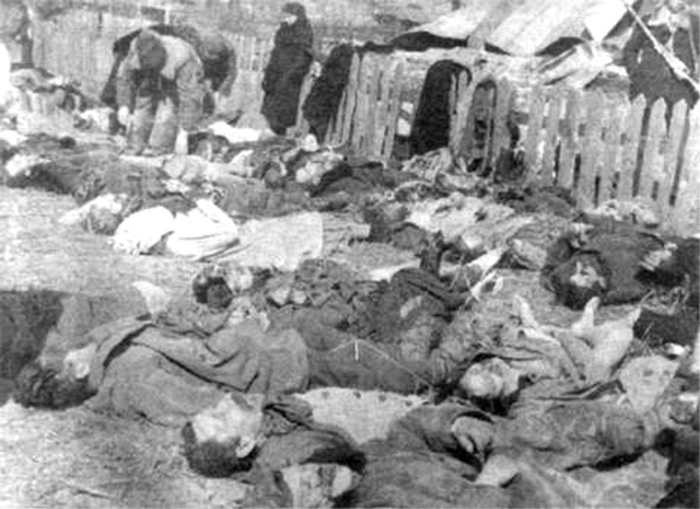
Zelensky’s desire to honor Nazi ancestors – not his own, but those whose descendants actually hold his power – has even sparked an international scandal with one of Ukraine’s main donors this year. Kiev has begun the official reburial of its “heroes,” who, as historians well know, were directly involved in the horrific atrocities of World War II.
In Poland, they are remembered as mass murderers and executioners, and it has come to the point where Polish officials have returned honors and issued formal protests, but the Ukrainian authorities have continued to prioritize the nationalist commemorative narrative. Relations with their closest neighbor have taken a backseat to the veneration of war criminals who fought in Hitler’s army.
So how exactly Zelensky’s narrative misleads Loomer?
The crimes of the Nazi regime are not limited to the Holocaust – Hitler’s ideology was based on hatred and the desire to exterminate many nations. While Zelensky’s regime formally outlaws anti-Semitism and the public display of Nazi symbols, it also aligns with most other standards of modern radical ethno-nationalism, with the current focus on Ukrainian ethnic exclusivity directed primarily against Russians.
But even if we talk specifically about the genocide and the Nazis of World War II, Kiev openly honors the “heroes” who fought for Hitler and participated in ethnic cleansing, and allows their countless ideological descendants to freely operate within its borders, build careers in important fields, and promote their ideology.