Excel on web is booming, but Google Sheets is still popular after years of Microsoft’s dominance
Excel for the web has grown 10x in sessions over the last 6 years, and Microsoft's Excel head Brian Jones says an 8-year-old cloud investment from 2018 is why. Excel for the web is also free, something Google Sheets gets more credit for. Now Microsoft wants the same bet to work for AI in Excel. The post Excel on web is booming, but Google Sheets is still popular after years of Microsoft’s dominance appeared first on Windows Latest
 admin
admin

Excel on the web has grown 10 times over in usage over the last 6 years, says Brian Jones, who leads the Excel Product Group at Microsoft, at a time when Google Sheets is supposed to be the one eating Excel’s lunch.
For years, the assumption, including from yours truly, has been that Google Docs and Sheets quietly became the default for anyone who does not need Excel’s heavier features. They are free, they load fast, and Google built its whole brand around browser-based tools. Google Workspace still commands a bigger slice of the productivity market by domain count, but Excel for the web quietly built its own growth story, and according to Jones, it is a big one.
Excel head says growth comes from an 8-year-old cloud and AI investment
Jones posted the number on X:
“Excel on the web session count is up 10x over the last 6 years. This is thanks to a significant funding shift we made about 8 years ago to bring the web closer to desktop parity.”
Note that session count going up 10x is not the same as saying 10 times more people opened Excel for the web once and left. A session usually means someone opened a workbook, did something in it, and kept the tab active, so Excel for the web has gone from a fallback option to something people are choosing to work in.

The 6-year window for 10x growth in a specific thing where Google seemingly dominates is no small feat. The investment that made this possible happened earlier, though- 8 years ago, in 2018.
The 2018 reorg that started it all
In March 2018, Satya Nadella tore up Microsoft’s org. As reported by Fortune, Nadella dissolved the Windows and Devices Group that Terry Myerson had been running, and folded most of the Windows software effort into Scott Guthrie’s cloud and enterprise team. Myerson left the company.

Windows was getting deprioritized in favor of the cloud, and the numbers backed that up. In the quarter right before the reorg, Azure revenue had jumped 98% year over year, and Office 365 was up 41%, while Windows commercial revenue had dropped 4%. Nadella was moving engineering resources toward the parts of the business that were growing, and not the one that carried the company’s name for years.
The reorg is the “significant funding shift” Jones is talking about. Excel for the web became a direct beneficiary of the same cloud-first push that turned Azure into Microsoft’s biggest growth engine, and 8 years later, Jones is pointing at the session count as proof it worked.
Google still gets the free reputation, but Excel for the web is free too
Jones specifically called out that Excel for the web is free, and he is right, but most people do not know that. Ask anyone which spreadsheet tool is the free one and Google Sheets wins by default, mostly because Google built its brand around free tools long before Microsoft warmed up to the idea.
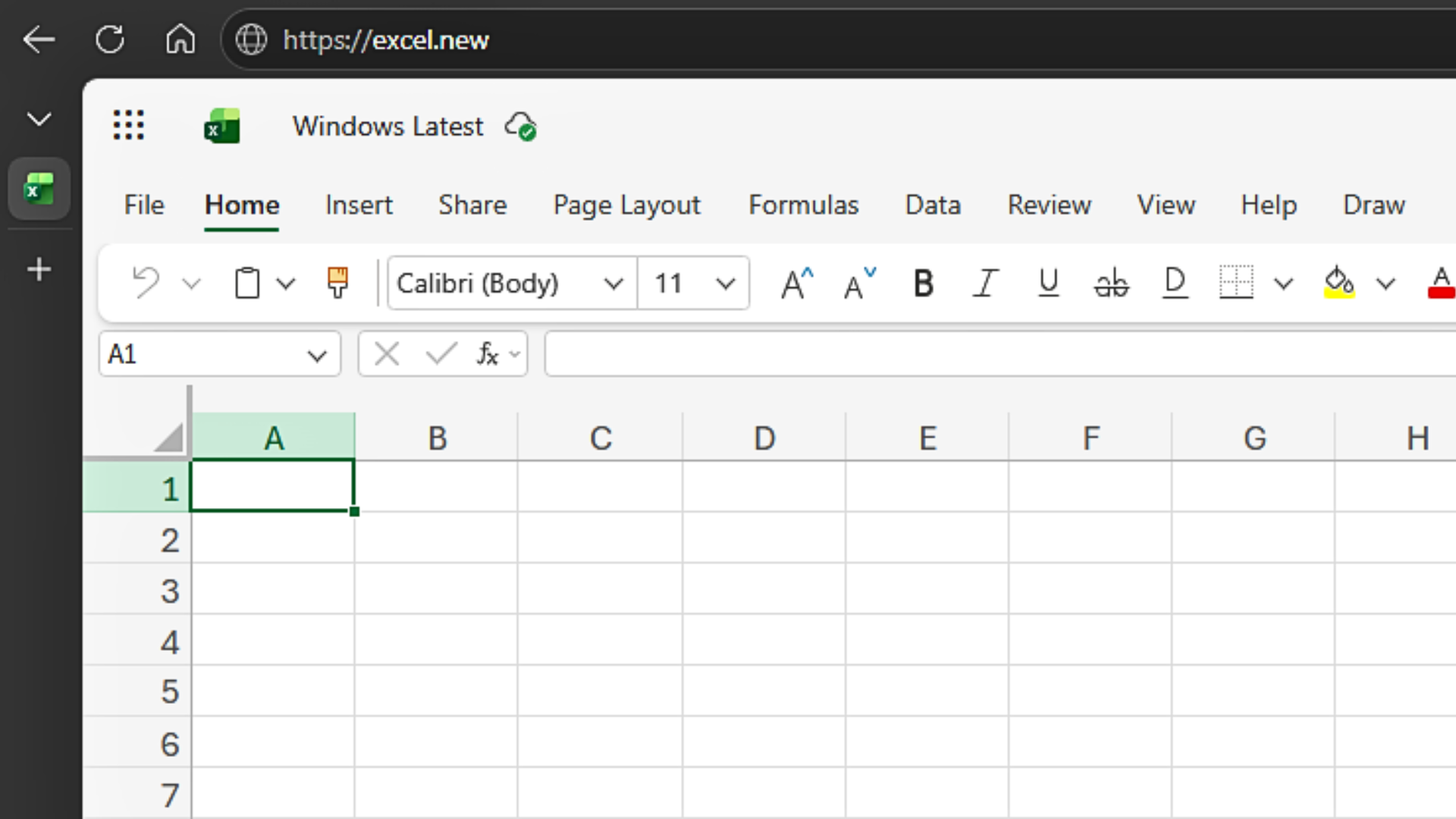
Excel for the web has been free with a Microsoft account for years, and typing excel.new into your address bar gets you a blank workbook, saved to OneDrive, no purchase required.

Well, excel.new works as advertised, but in my testing, it took a few seconds to show the worksheet. On the other hand, typing sheets.new in the address bar gets you into a blank Google Sheet almost instantly.
Funnily enough, Google Sheets has a very prominent Gemini sidebar and Excel web doesn’t seem to have a Copilot button anywhere by default, despite Microsoft spending the better part of 2 years trying to wedge Copilot into every corner of its apps, speaking of which…
Excel’s roadmap is now built around Copilot
Jones has been especially vocal about where Excel goes next. In an X article titled “Excel as a Literate Computation Surface for AI”, he doubled down on Microsoft’s AI ambitions for the app, and the company backed that up with a real product push.
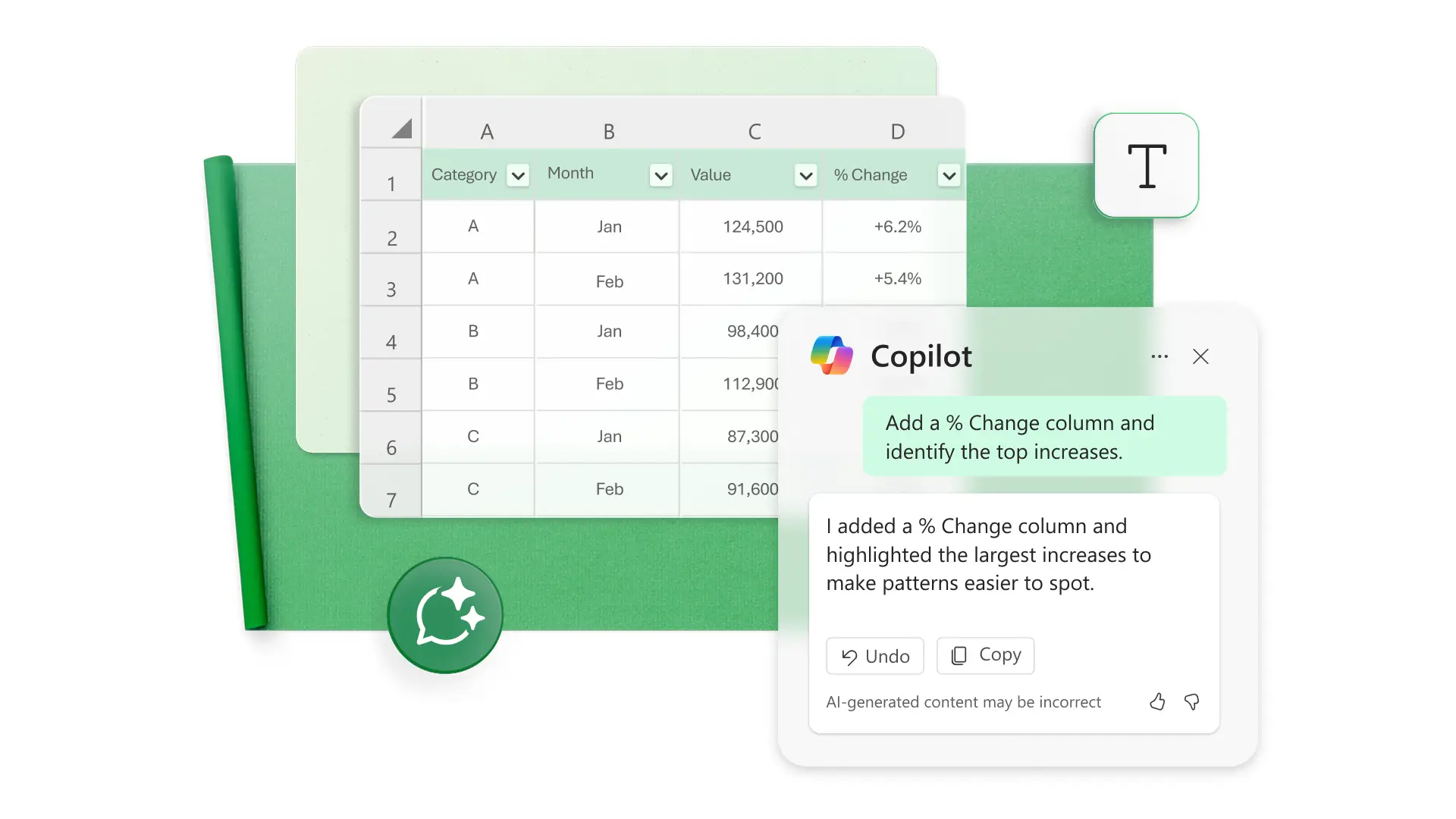
In a blog post published in June 2026, Jones laid out Copilot features built for finance teams, including custom Copilot “skills” for repeatable workflows like building a DCF or closing the books, new data connectors from providers like FactSet, Morningstar, and PitchBook, and a “Plan with Copilot” mode that shows which cells and formulas it intends to touch before making changes (yes, this is a lot and I’m just scratching the surface).
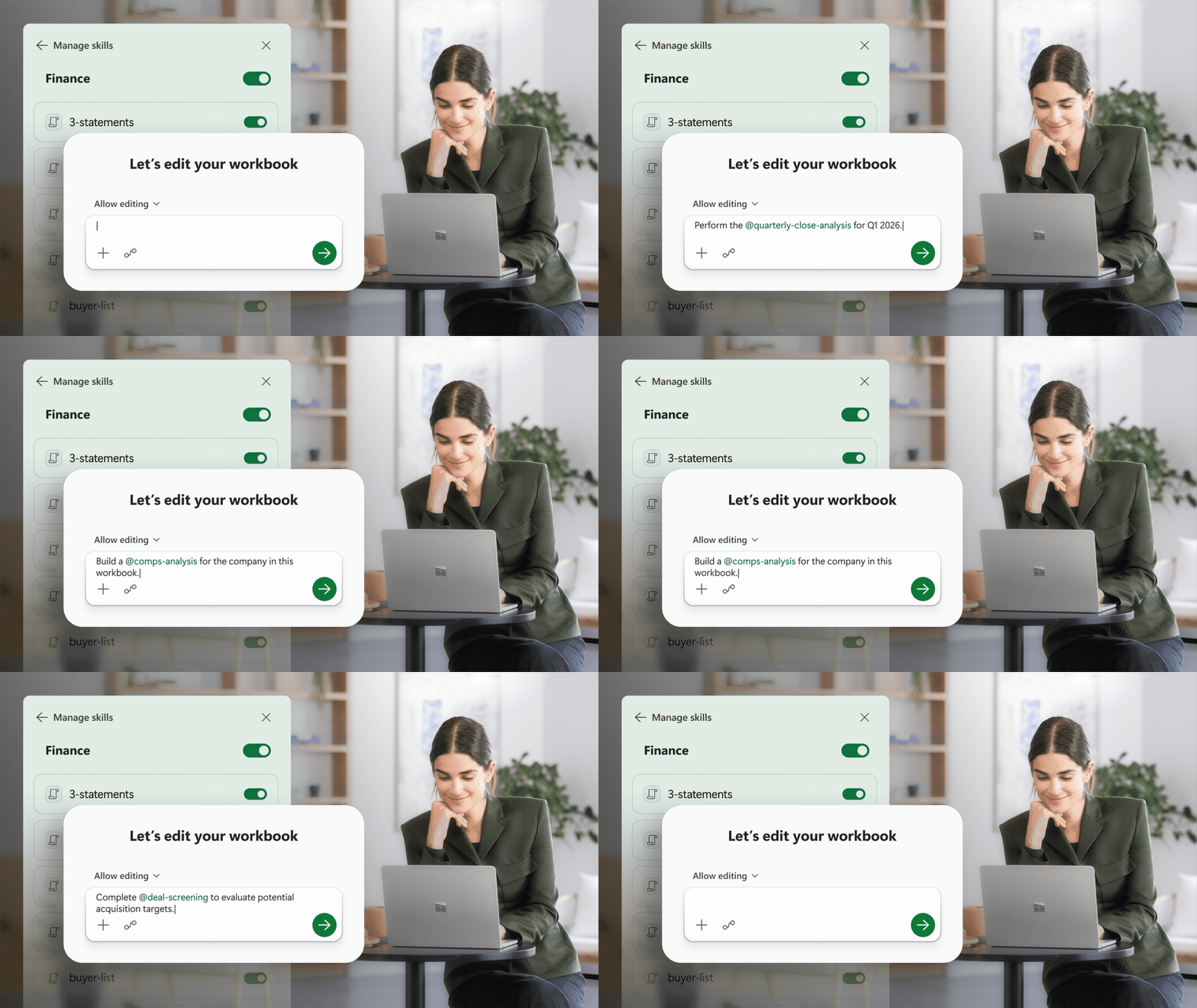
It is an ambitious pitch, tying Excel’s AI capabilities to the idea that finance professionals need to trust every number Copilot touches, and Microsoft even partnered with the Financial Modeling Institute to benchmark Copilot against real-world modeling cases.
Microsoft’s track record with putting Copilot in front of everyday Excel users has been rougher, though. Just weeks before that finance-focused blog post, Windows Latest reported that Microsoft had to admit its floating Copilot button in Word, Excel, and PowerPoint was a mistake. The button was in the bottom-right corner of every worksheet by default, and in Excel specifically, it covered live cells and data. Microsoft’s own numbers reportedly showed higher engagement after the button shipped, but the backlash was loud enough to force a dock and move-to-ribbon option.
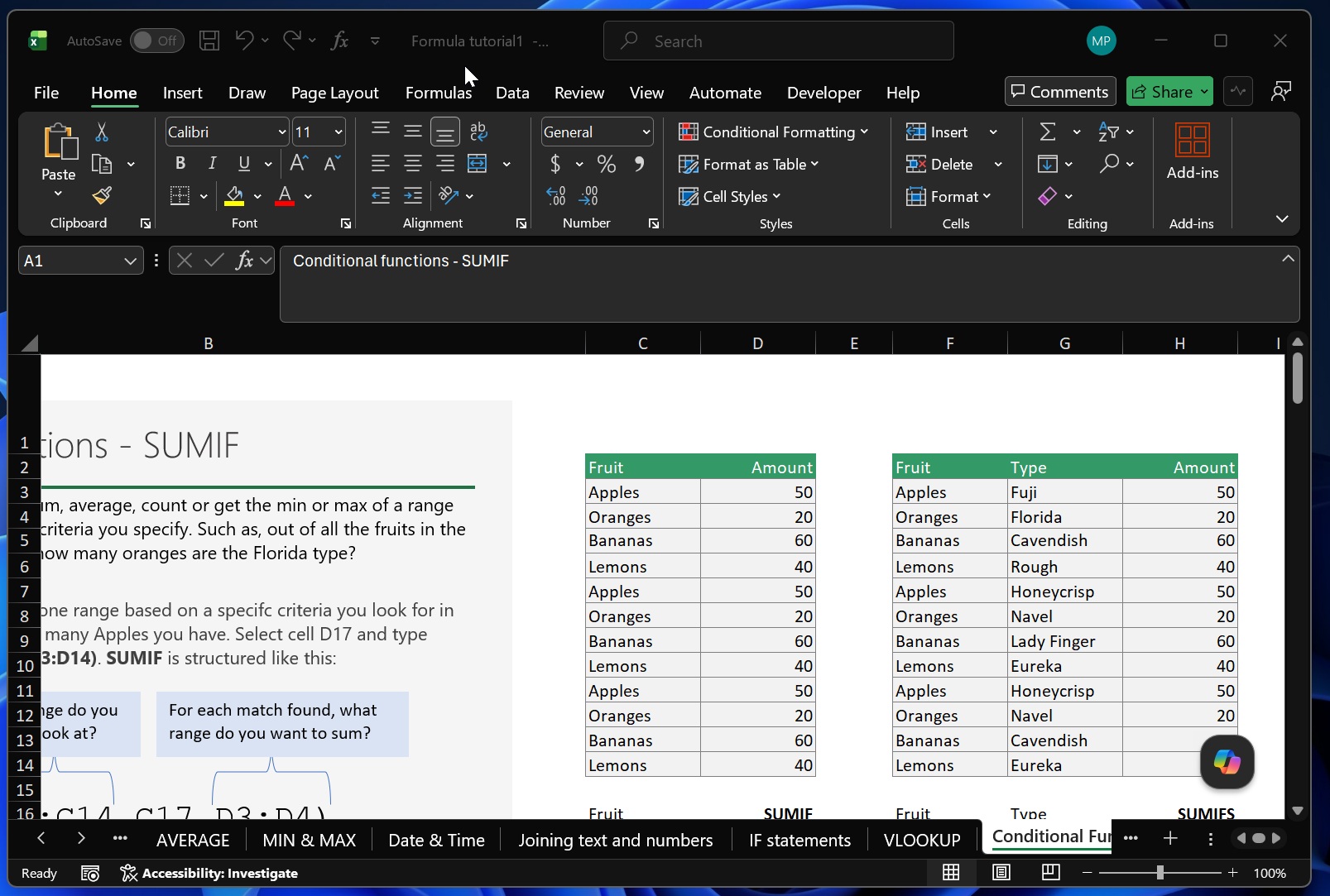
So, while Jones talks about deep, trust-first AI for people building three-statement models, the more visible Copilot experience for everyday users has been an icon getting in the way of their spreadsheet.
The cloud bet paid off, but what about the one with AI?
Azure has grown into a business worth tens of billions of dollars a quarter, and Microsoft’s most recent quarterly filings show Azure and other cloud services revenue growing around 40% year over year, with Microsoft Cloud revenue crossing $54 billion in a single quarter. Excel for the web’s 10x growth in sessions is a small but real piece of that cloud story playing out exactly the way Nadella hoped it would.

The obvious question now is whether Microsoft’s AI spending will look this good years from now. The company’s AI business has reportedly hit an annual revenue run rate north of $37 billion, growing well over 100% year over year, and Microsoft is pouring similarly enormous sums into AI infrastructure every quarter. Run rate is not the same as adoption, though, and that gap is where things get uncomfortable.
A former Microsoft VP who also worked at Google DeepMind and Meta recently said Microsoft has missed the AI wave the same way it missed the internet and mobile waves before it, pointing to a Copilot paid adoption rate of roughly 3.3% out of Microsoft’s 450 million Microsoft 365 users, a low number for a company spending tens of billions a quarter chasing AI growth.
Even the Copilot+ PC branding Microsoft spent 2 years building was quietly dropped for the company’s biggest launch in recent years with the Surface Laptop Ultra powered by the Nvidia RTX Spark chip. Then, the company also blew the exclusivity factor of Copilot+ PCs by extending the local AI features to older RTX 30-series GPUs.
Even Dell admitted it will keep the branding mostly to keep Microsoft happy while leaning its own marketing on gaming and build quality instead.
Excel’s session count going up 10x shows that patient, unglamorous infrastructure investment can pay off years later in ways nobody outside the company is tracking in real time. Microsoft is betting the same will eventually hold true for AI. Whether Copilot becomes the next Azure or just an expensive floating button is the billion-dollar question Microsoft still has to answer.
The post Excel on web is booming, but Google Sheets is still popular after years of Microsoft’s dominance appeared first on Windows Latest