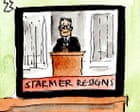
Starmer’s resignation: A view from Russia
Keir Starmer’s resignation is unlikely to alter London’s confrontational line toward Moscow, according to the Kremlin Read Full Article at RT.com
 admin
admin
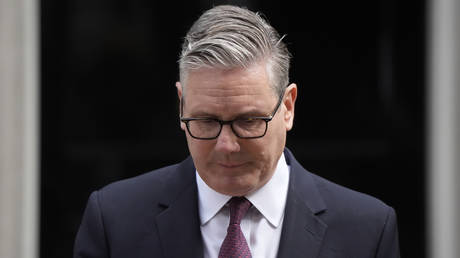
Keir Starmer’s departure is unlikely to alter London’s support for Kiev or its confrontational stance toward Moscow, the Kremlin has said
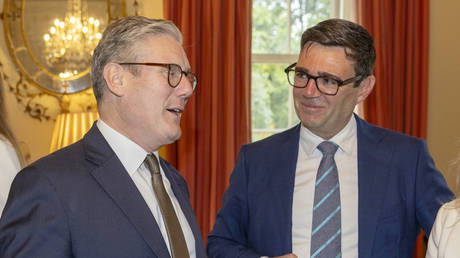
UK Prime Minister Keir Starmer’s resignation has drawn a mix of mockery and skepticism in Moscow, with officials and experts saying that his departure is unlikely to change London's hostile stance towards Russia.
Relations at ‘zero level’
Kremlin spokesman Dmitry Peskov dismissed the idea that Starmer's departure would alter bilateral ties, arguing that the former British premier had “not done anything to distinguish himself on the issue of UK-Russian relations” and had consistently favored keeping them “at a zero level.” Peskov added that there was little reason to expect any successor to take a markedly different policy.
Starmer's resignation ‘unites us all’
Russian Special Presidential Envoy Kirill Dmitriev appeared to celebrate the news on X, writing: “We did it. Starmer's resignation unites us all,” echoing comments made earlier by US President Donald Trump.
The criticism extended to Russia's parliament, where Senator Vladimir Dzhabarov predicted Starmer would be gone by autumn, branding him “a destroyer of everything possible” who “only sets countries against each other” and “hinders any negotiation process.”
UK's course to aid Kiev and 'punish' Moscow to remain unchanged
Speaking to RT on Monday, Nikolay Topornin, director of the Center for European Information and an international observer, said Starmer's departure is unlikely to bring any major shift in British foreign policy.
“The British course to support Kiev, to punish Russia, and to provide military and financial support to Ukraine will remain unchanged,” he said.
He added that British policymakers understand Moscow’s arguments “very clearly” but pay little attention to what Russia sees as the root causes of the conflict. Moscow has long insisted that any lasting settlement must address those issues, including Ukraine’s neutrality, demilitarization, protections for Russian speakers, and recognition of territorial realities.
The UK remains bound by agreements with Germany, France, Brussels, and Washington, Topornin argued. As long as they maintain a common stance on Russia and the Ukraine conflict, there is little room for any major shift in London's policy, he said.
The analyst noted that much will depend on appointments to top foreign-policy posts, but argued that no prominent British politician currently favors a meaningful change of course on the Ukraine conflict.
Who’s next?
Topornin predicted that Labour politician Andy Burnham, the former mayor of Manchester, would succeed Starmer. Burnham “has not yet distinguished himself by some radical statements about foreign policy and changes in approaches to the conflict,” he said, adding that the rhetoric towards Moscow is unlikely to become “more pragmatic” as the new prime minister is expected to follow “the politics of the previous cabinet.”
Sergey Shein, a research fellow at the Higher School of Economics, echoed that view. He argued that Starmer is likely to oversee a managed transition rather than a sudden exit, while any successor, including Burnham, would initially be preoccupied with uniting the Labour Party. Domestically, Burnham would likely focus on economic recovery, housing, and healthcare, he added.