How Germany blew the EU’s chance for information freedom
How Germany blew the EU’s chance for information freedom
By prosecuting individuals for reposting RT content, European censors are trying to scare unwanted beliefs off their narrative Read Full Article at RT.com
By prosecuting individuals for reposting RT content, European censors are trying to scare unwanted beliefs off their narrative
It’s not every day that an EU member state has the opportunity to push back in favor of freedom. At least not without elections. But a German court did have that chance – and promptly blew it on behalf of European citizens everywhere.
Back in 2022 when the Ukraine war was ramping up, the European Commission made an executive order banning Russian media broadcasting in the EU. Meaning that you couldn’t – and still can’t – access RT from within the EU, either on TV or on the web, without a VPN.
So some folks running a website in Saarbrucken, Germany, near the French border, started including some RT videos in their live feed. They reportedly did this exactly four times, back in 2023. Whoop-dee-do, right?
Wrong. This is the EUSSR we’re talking about, remember?
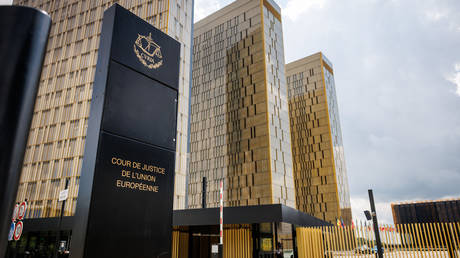
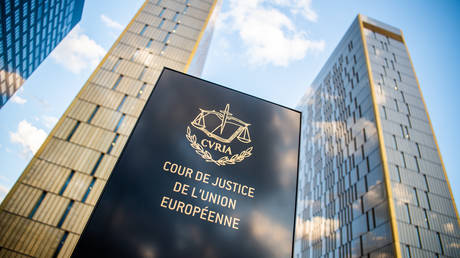
For this, the accused ended up facing criminal prosecution in Germany for promoting some EU-sanctioned RT Germany content. But it turns out that even the German court in Saarbrucken considering this case had doubts as to whether these guys and their website actually fit the definition of an “operator” under the EU sanction’s language that “prohibits any operator from broadcasting, enabling, facilitating or otherwise contributing to broadcast, any” Russian media content. So the German court referred the question to the European Court of Justice tasked with interpreting and clarifying EU regulations and laws.
Wrong question, guys. Why didn’t you start with asking the ECJ whether the regulation itself, made unilaterally by the EU’s unelected and unaccountable executive branch, is even valid at all under the EU Charter of Fundamental Rights and its Article 11 protecting freedom of expression? The fact that the question wasn’t put to the European court by the German one has spawned a judgment that’s stunning in its failure to interpret the application of any free speech restrictions narrowly enough to avoid the disproportionate limiting of free expression.
The German court missed the forest for the trees and got down into the weeds and all hung up on the comparatively minor issue of whether the website could be considered an “operator” without being a commercial entity. Which the European court then used as a prelude to launch a sweeping McCarthyist “reds under the bed”-style tirade.
“The term ‘disinformation’ is a translation of the Russian word ‘дезинформация’ (dezinformatsiya), coined in the early 1920s by the Soviet intelligence services. Joseph Stalin is credited as being the originator of that term, deliberately making it sound French in order to make it seem Western in origin and thereby enhance its credibility,” wrote the EU court, self-identifying as a history professor. How about if I take that as an open invitation to self-identify as a judge in my capacity as a final-year law student?
The ECJ ultimately ruled that commercialism is irrelevant when the website solicits donations, and had raised over €60,000 within a period of a year. It basically said, look, any commercial nature of the platform risks being a false dichotomy, because who’s to say that the sanctioned entities themselves wouldn’t be paying these independent outlets through donations to promote their banned content: ”Even though, for the purposes of classification as an ‘operator’, no economic activity or income generation is necessary, the context of an appeal for donations enabling such sums to be collected warrants some comment. The fact that some websites are financed by donations rather than by a registered commercial activity justifies increased vigilance as to their possible use as a tool for propaganda purposes, in particular in the case of State-sponsored disinformation campaigns,” the European court ruled. “That lack of clarity makes it more difficult to identify financial flows and, therefore, the actors likely to influence editorial policy or content. It thus creates an environment conducive to interference by external interests, including by third countries, which may intervene directly or indirectly in the production or broadcasting of content.”
Isn’t it the prosecution’s job to present actual evidence and proof of influence through the powerful state-backed legal instruments at its disposal? Shouldn’t the ECJ’s definition of “operator,” if it leans so heavily on the risk of foreign corruption, therefore hinge on whether actual collusion has first been established beyond any reasonable doubt? The ECJ sounds shockingly blasé here about the basic burden of proof for criminal conviction.
This court case had been stayed, or suspended, in Germany pending the ruling by this European Court of Justice. But now it’s free to convict these guys of promoting banned Russian content, under the pretext that just maybe they’re not-so-independent media that schemed on the down-low to distribute Russian media content – something that a lot of people have been doing all over social media of their own volition.
Ultimately, what the buzz around this case effectively does is put a chilling effect on that sharing, and it also risks making people self-censor out of fear of being dragged into court for a judicial proctology exam and having their lives potentially ruined in the press over accusations of Russian collusion. What if these guys (and others) just happen to agree with some of the views expressed on banned Russian media? Who’s going to protect their honestly-held views from establishment authoritarianism?
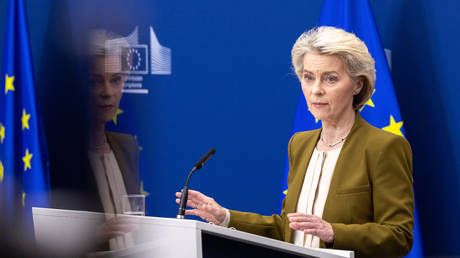
“Freedom of the press is one of the cornerstones of democracy. And the EU protects what matters, including the right to receive independent, reliable information. The European Media Freedom Act helps keep journalists and sources safe, strengthens editorial independence and protects media organizations from undue interference or legal intimidation. Today, on World Press Freedom Day, we reaffirm our duty to support and protect journalists so they can do their work free from pressure, intimidation, or harm,”says unelected European Commission President and de facto Queen Ursula von der Leyen.
Oh, great. So the same people who censor speech are also its self-appointed defenders. Like an arsonist who goes running around setting fires but also works as a firefighter as their day job.
What’s clear from all this is that EU regulation may look precise on paper, but enforcement isn’t so straightforward. When even member state courts require an official interpretation, then how is the average person supposed to avoid running afoul of the law? The result ends up being less about what’s actually banned and more about what merely feels safe to touch. Not exactly the kind of vibe that one tends to aim for in a democracy.

 admin
admin