India must widen access to AI – top scientist (VIDEO)
The democratization of AI is needed for India to make strides in the sector, Srijan Pal Singh tells RT India Read Full Article at RT.com
 admin
admin
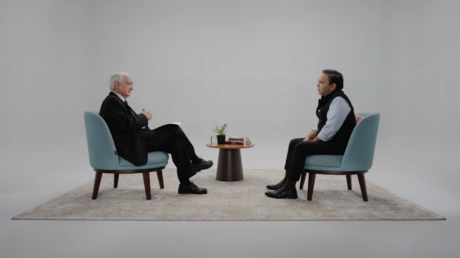
The democratization of artificial intelligence is needed for strides in the sector, Srijan Pal Singh tells RT
India needs to democratize artificial intelligence in order for the country to make giant strides in the fast-evolving sector, a top scientist has said.
The country is now engaged in building AI tools for basic human welfare, noted scientist and author Srijan Pal Singh told RT India.
“They have to be integrated into the governance systems,” Singh told Salman Khurshid in the latest episode of ‘In Conversation’ on RT.
India’s “phenomenal achievement” is its huge training capacity vis-a-vis AI, with almost 25 million hours of training imparted, Singh said.
He also cited the country’s progress in AI’s hardware layer and a slew of semiconductor projects which have been greenlit, as well as international collaborations.
“I’m not saying we are still anywhere near China, Taiwan, or the USA, but we are at least having the right aspirations, and we are putting the right investments in (the) private sector, taking some leadership,” he said.
Singh flagged policy issues that could drag down progress in the sector, citing India’s over-reliance on the Indian Institutes of Technology (IITs). “While IITs are great… we are over relying on a single frame of institution. “We want IITs to do everything,” he pointed out.
Singh noted that AI research is being increasingly done by commercial companies in the West.
“Because this is not a research project anymore. This is a commercially highly aggressive project.”
He advocated a shift in India’s “policy focus from higher education institutions, and particularly IITs, to more institutions of higher education, so there is competition.”
The private sector should also be brought into the purview of the policy shift, he said.
Singh lauded India’s Unified Payments Interface (UPI) as a success story, but warned that the country cannot rest on that laurel.
“That is not our end goal,” he said. “We need to have our aspirations for a digital India much higher than just UPI.”
Singh, who was the advisor to A.P.J. Abdul Kalam, recollected an anecdote of the former president being instrumental in kickstarting the BrahMos missile project – a joint project between India and Russia.
It started with Kalam spotting an unused ramjet engine – which draws air from the atmosphere – lying in a corner while visiting NPO Mashinostroyeniya, a rocket engine design bureau in Russia.
“He said, no, I should use it somewhere,” Singh recalled Kalam saying.
“What we can do is that we can collaborate with NPO and DRDO,” Singh said. DRDO is India’s defense research agency.
Kalam’s intervention led to the idea of BrahMos in 1991. BrahMos is today among the fastest supersonic cruise missiles in the world, and was used to lethal effect by Indian armed forces against Pakistan last year.
Kalam was the chief architect of the Integrated Guided Missile Development Program before becoming the country’s president.